Attic cleanup
Attic Rat Cleanup in New Orleans, LA
Clearing droppings, nesting material and soiled insulation, then treating the space so it stops attracting rats.
Once roof rats have lived in an attic, the mess they leave keeps working against you. Droppings and urine soak into insulation, the scent tells passing rats the space is good, and the contamination sits directly above the rooms you live in. Cleanup is the part of the job that closes it out properly.
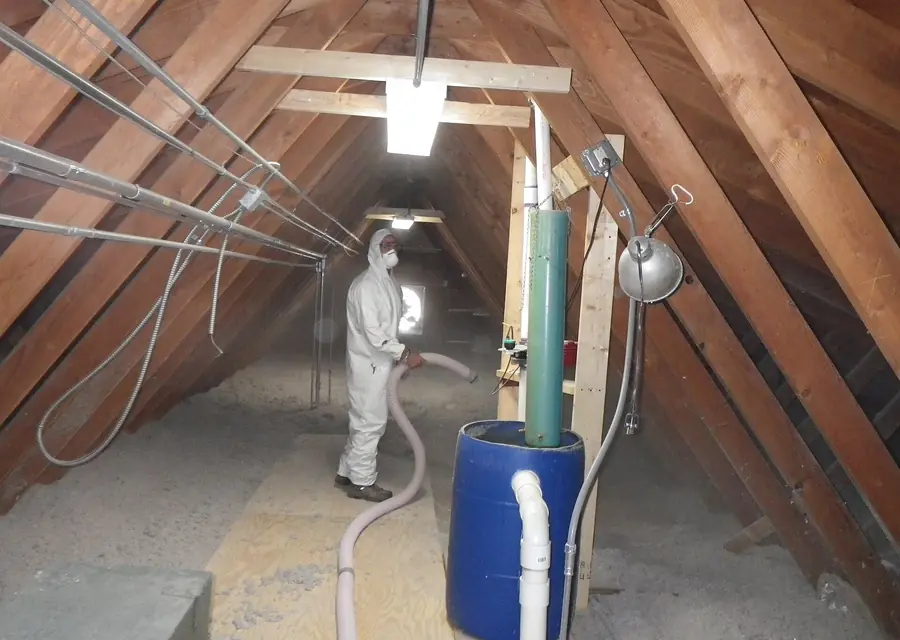
What rats leave behind in an attic
Droppings, and a lot of them. A single roof rat produces dozens a day, so an attic occupied for a season holds thousands. Urine, which soaks through insulation and stains the ceiling below in bad cases. Nesting material pulled together out of insulation, cardboard, paper and fabric. Grease and rub marks along the runways. Gnaw damage to wiring, ductwork and stored belongings.
The insulation itself takes the worst of it. Rats tunnel through it, flatten it and soil it, so it stops doing its job in a climate where an attic runs brutally hot for half the year. Soiled insulation is usually removed rather than salvaged.
How the cleanup is done
Sealing comes first. There is no point cleaning an attic that is still open, so entry points get closed before the cleanup starts. Then the technician works in protective equipment with a HEPA-filtered vacuum, because dry droppings and nesting dust should not be swept or blown around.
Droppings and nesting material are removed and bagged. Contaminated insulation is taken out. Surfaces get treated to knock down bacteria and break up the scent trail that draws new rats in. Then fresh insulation goes back where it was removed, which also restores the attic performance you lost.
Why it matters in this climate
New Orleans humidity works against you here. Contaminated material in a hot, damp attic holds odor and grows mold far faster than it would in a dry climate, and the smell will find its way into the house. Add the leptospirosis and salmonella risk from rodent urine and droppings, and clearing the material out is worth doing properly rather than leaving in place.
What leaving it actually does
The scent is the biggest issue. Rodent urine and droppings mark a space as occupied and safe, and passing rats read that. An attic that has been cleared of rats but not cleaned is measurably easier for the next one to move into, which is why so many houses get a second infestation within a year.
Then the smell reaches you. In New Orleans humidity, soiled insulation holds odor and grows mold far faster than it would in a dry climate, and heat drives that air down into the rooms below. Homeowners often describe it as a musty smell they cannot place until someone goes up and looks.
Then the performance loss. Insulation that has been tunneled, flattened and soiled no longer does its job, in a city where an attic runs brutally hot for half the year. Replacing it is a comfort and running-cost issue as much as a hygiene one.
What to expect on the day
Access and containment come first. The technician works from the attic hatch with the space below protected, so nothing is tracked through the house. They work in protective equipment, because dry droppings and nesting dust are exactly what you do not want airborne.
Removal is done with a HEPA-filtered vacuum and by hand for the bulkier material. Droppings, nesting debris and soiled insulation get bagged and taken away. Surfaces along the runways get treated to knock down bacteria and break the scent trail.
Then reinstatement. Fresh insulation goes back where it was removed, to the depth it should be. If ductwork or wiring was chewed, that gets flagged so you can get it repaired, and chewed wiring should be treated as urgent rather than noted for later.
Attics, ducts and stored belongings
Flexible ductwork is the item most often damaged and least often checked. Rats chew through the outer wrap and into the inner liner, which dumps your conditioned air into a hot attic and pulls attic dust into the rooms below. If the house has felt harder to cool and the bills have crept up, that is worth looking at while the attic is open.
Stored belongings take a hit too. Cardboard boxes are nesting material as far as a rat is concerned, and paper, photographs, fabric and holiday decorations all get shredded. Anything worth keeping should come down out of the attic and be checked before it goes back, and it is worth moving it into sealed plastic trash cans rather than cardboard.
While the space is clear, it is also the easiest time to look at the things you never otherwise see: the underside of the roof deck for daylight, the top plates for gaps into the wall cavities, and the condition of the insulation across the whole attic rather than just where the rats were.
Questions we get
Attic Rat Cleanup questions
Do I really need my attic cleaned after rats?
If there is a real build-up of droppings, nesting material or soiled insulation, yes. The scent left behind actively attracts new rats to the space, the contamination sits above your living rooms, and soiled insulation no longer insulates properly.
Can I clean up rat droppings myself?
It is not recommended. Dry droppings and nesting dust become airborne when disturbed, which is exactly the wrong thing to breathe. The work should be done with proper protective equipment and a HEPA-filtered vacuum rather than a broom or a household shop vac.
Does the insulation always have to be replaced?
Not always. Light activity in one corner may only need spot removal. Heavy nesting, tunneling and urine saturation across an area means that section comes out and gets replaced.
Talk to someone about it
Get attic rat cleanup in New Orleans
Describe what you are hearing and where you are hearing it. You get upfront pricing and no obligation before any work starts.
504-395-3296Help available day or night. Serving New Orleans, Metairie, Kenner, Gretna, Chalmette and the surrounding parishes.