Inspection
Rat Inspection Services in New Orleans, LA
Finding the species, the entry points and the runways, so the work that follows is aimed at the right places.
Every rat job should start with someone reading the building. Which rat, how many, where they get in, where they travel and what damage is already done. Skip that and you are guessing, and guessing on rats is expensive. Call 504-395-3296 and get the inspection done first.
What the inspection covers
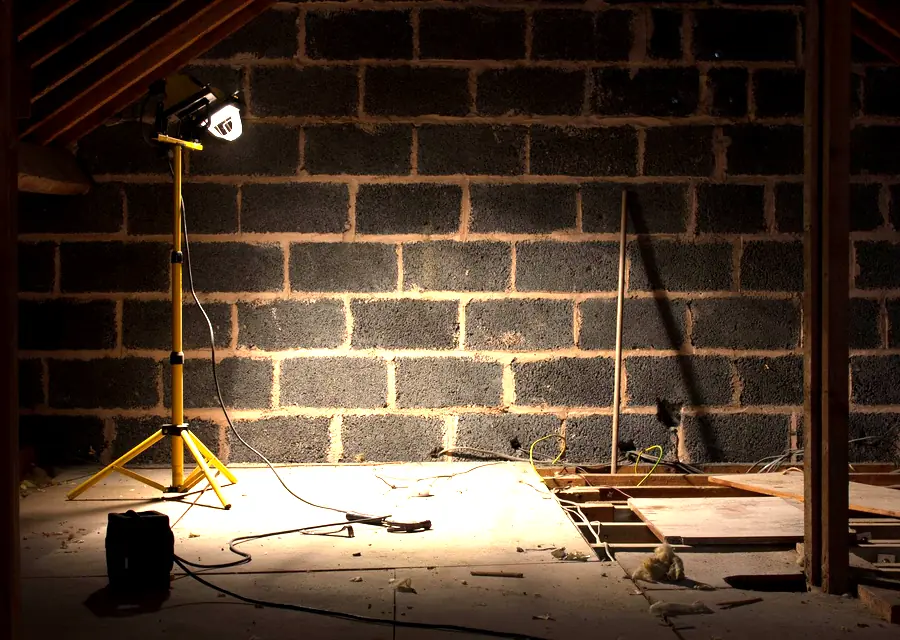
Inside, the technician works the attic, the pier space or slab perimeter, the kitchen and pantry, the laundry and water heater closet, and any wall or ceiling void where you have heard activity. They are looking for droppings, urine staining, rub and grease marks, gnaw damage, tracks in dust and nesting material.
Outside, they walk the full perimeter and the roofline. Soffit and fascia joints, gable and attic vents, roof-to-wall junctions, weep holes, pipe and AC line penetrations, dryer vents, door thresholds, foundation cracks, pier bays and skirting. They also look at what touches the building: limbs, palms, vines, fences, cable lines and stacked material against the wall.
What the droppings tell you
Species identification usually comes from the droppings, and it changes the whole plan. Roof rat droppings are around half an inch, curved and pointed at the ends. Norway rat droppings are bigger, up to three quarters of an inch, and blunt at the ends like a capsule. Mouse droppings are small, roughly a grain of rice.
Freshness matters too. New droppings are dark and soft. Old ones go gray, dry and crumbly. A pile of old droppings with nothing fresh means a problem that has moved on or been dealt with, and that is worth knowing before you pay for treatment.
What you get at the end
A clear read on which rodent you have, where it is getting in, how established it is, and what the work involves. You get the price before anything starts, with no obligation to go ahead. If the noise in your ceiling turns out to be squirrels or birds, you want to find that out at the inspection rather than after two weeks of rat traps.
Raised house or slab house changes the inspection
On a raised pier-and-beam house, the underfloor space is the priority. The technician gets under the building where access allows and reads the dirt: burrow openings at the perimeter, worn runways, droppings, and gnaw marks on joists and subfloor. Then every floor penetration is checked from below, plus any insulation hung between the joists, which rats nest inside.
On a slab house, the attention shifts to the slab edge and the wall base. Burrow holes along the foundation, weep holes and the cavity behind brick veneer, AC line and plumbing penetrations, the dryer vent, and the bottom corners of garage doors. Attached garages and utility rooms get checked properly, because they are usually occupied before the house is.
The roofline gets the same treatment either way, from the ground and from inside the attic. The attic is where the clearest evidence usually is: runways in the insulation, droppings concentrated along the top plates, and daylight visible at a gap that should not be there.
Questions worth asking while the technician is there
Which species, and what is the evidence? A straight answer names roof rat, Norway rat or house mouse and points at the droppings or damage that show it.
How many entry points, and where? Ask to be shown at least the main ones. If a gap can be photographed, it can be explained, and the count is what drives the exclusion price.
What is included, and what is quoted separately? Trapping, follow-up visits, exclusion and cleanup should each be visible on the quote. Attic insulation removal is the item most often left out of a low number.
What material is being used to seal? Galvanized hardware cloth, sheet metal and copper mesh hold. Expanding foam and caulk on their own do not, because rats chew both.
What an inspection turns up besides rats
Getting into an attic and under a floor tends to surface things nobody was looking for. Chewed electrical wiring is the one that matters most, and it gets flagged immediately because it is a fire risk rather than a pest issue. Damaged flexible ductwork is the next most common, and it quietly costs you money every month in a climate like this.
Water shows up often too. A slow supply-line leak under a raised house, a roof leak staining the deck above the insulation, or ground under the house that never dries. All three make a building more attractive to rodents, and all three are cheaper to deal with early.
Then the structural notes: soft fascia and rafter tails, termite-damaged skirting, and insulation that has compacted or slumped. None of that is rat work, and knowing about it changes what you do next and in what order.
Questions we get
Rat Inspection questions
What does a rat inspection include?
A full walk of the building inside and out: attic, pier space or slab perimeter, kitchen and laundry, then the whole exterior and roofline. The technician identifies the species from droppings and damage, maps the entry points and runways, and explains what the work would involve before you commit to anything.
How long does an inspection take?
Usually under an hour for an average New Orleans single-family home. A large raised house with a full attic and an open pier space takes longer, and so does a commercial building with a kitchen and storage areas.
Can you tell how many rats are in my house?
Not to an exact number, but the volume and spread of droppings, the number of active runways and how quickly traps fill give a reliable read on whether you are dealing with a couple of animals or an established population.
Talk to someone about it
Get rat inspection in New Orleans
Describe what you are hearing and where you are hearing it. You get upfront pricing and no obligation before any work starts.
504-395-3296Help available day or night. Serving New Orleans, Metairie, Kenner, Gretna, Chalmette and the surrounding parishes.